“When’s the best month to visit Hualien?” That question works better inverted.
What are you actually worried about — arriving to closed shutters, a typhoon, wind, or crowds? Hualien’s night changes face by season, and more visibly than a west-coast city does. It isn’t only weather. Crowds and opening hours move together.
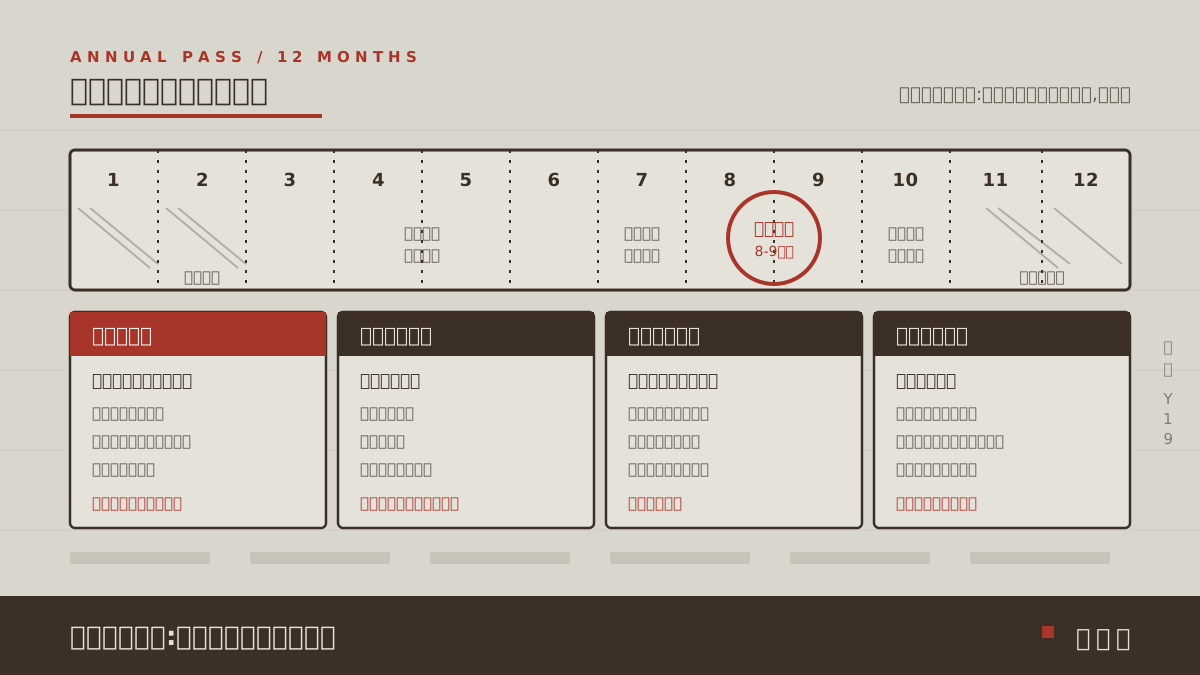
An annual ledger
- Jan-Feb: tail of the northeast monsoon, windy nights on the coast. Zhixue Street dark for winter break.
- Mar: a transition month — few people, low rates, downtown unchanged.
- Apr-May: the most comfortable stretch of the year. Firefly season around Liyu Lake.
- Jun: summer starts; the last quiet run before the school holidays.
- Jul-Aug: peak season. Downtown rooms at their most expensive, book early. Typhoon season opens.
- Aug to mid-Sep: Chike Mountain daylily season, the valley’s annual set piece.
- Sep-Oct: the tail of typhoon season — and on a clear day, the best sea of the year.
- Nov-Dec: the monsoon arrives and the night starts retreating into the city.
August to mid-September: the valley’s one peak
Yuli is normally a town so quiet after nine you can hear the river. Daylily season is the exception. Chike Mountain sits above Gaoliao in Guanyin, Yuli, and the hillsides turn gold beneath sunrise cloud seas; mountain guesthouses sell out. Liushishi Mountain in Fuli, further down the southern valley, runs on the same calendar and the same scale.
The night-specific advice is concrete: do not drive the mountain road in the dark. Want sunrise, sleep up there. Otherwise descend before nightfall and spend the evening in Yuli town or back north in Hualien City.
Worth saying plainly: the season heats up the daytime. Yuli’s night is still Yuli’s night, and the old shops close when they always closed.
Summer and autumn: reading the typhoon window
Eastern Taiwan takes the first hit, and there’s no gentler version of that sentence.
The effects chain: transport can be cut, businesses close early, the coast becomes untouchable. The way to judge it isn’t how far the track looks on a forecast map — it’s checking TRA and highway notices the day before and again that morning.
The fallback is simple. Pull the whole plan back into Hualien City. The market, the bars and the massage shops are indoors or under arcades, which handles outer-band rain.
Winter: the monsoon herds the night indoors
Hualien’s winter isn’t severe, but damp plus wind changes the experience completely. The coast shows it first.
Qixingtan and the Nanbin seafront get windy and dim on winter nights, and they had no venues to begin with — in winter, even twenty minutes is a stretch. For winter stargazing, set expectations to “get out, take a few frames, get back in the car.” Detail in stargazing at Qixingtan.
Winter nights belong downtown. Dongdamen runs to about eleven on weekdays with some weekend stalls past midnight, the bar lanes off Zhongshan and Zhonghua Road operate as usual, and the massage round is there. Winter is arguably the least complicated version of Hualien.
Spring: the only night with a subject
April and May bring firefly season around Liyu Lake in Shoufeng, the valley’s single night-time attraction. Comfortable temperatures, and the summer crowd hasn’t arrived.
The same window is term time, so Zhixue Street’s snack and drink shops run past ten — the cheapest night in the county, and one that disappears during breaks. How to check is in Zhixue Street’s two nights.
Three things the quiet season does better
First, rates. The gap between a downtown room in August and the same room in March is not a rounding error; the trade-offs are in where to stay in Hualien.
Second, no queues. The lines at Dongdamen’s popular stalls in peak season are effectively absent on a low-season weekday.
Third, staff have time for you. Hard to quantify, but walking into a downtown bar off-season, where the bartender can actually talk, is not the same experience as a summer Saturday.
The price of the quiet season is that the valley and coastal towns sleep even earlier. Whether that trade works depends on what you came to see. And if you drank, the answer is identical in every season: take a car.