A familiar scene. Half past eleven, standing in the Qixingtan car park, the ride app finding nobody, and the last bus on the timetable left four hours ago. The wind is strong. You didn’t bring a jacket.
That isn’t bad luck. That’s three unanswered questions.
The short version
Hualien gives you three reliable tools after dark: a taxi, a designated driver, or your own vehicle. Trains are the daytime backbone, buses are a daytime tool, and neither covers late night. The decision that matters isn’t the trip home — it’s made before you leave. Where are you sleeping, when do you need to be back, where is the vehicle parked.
Trains: the backbone, finishing earlier than you expect
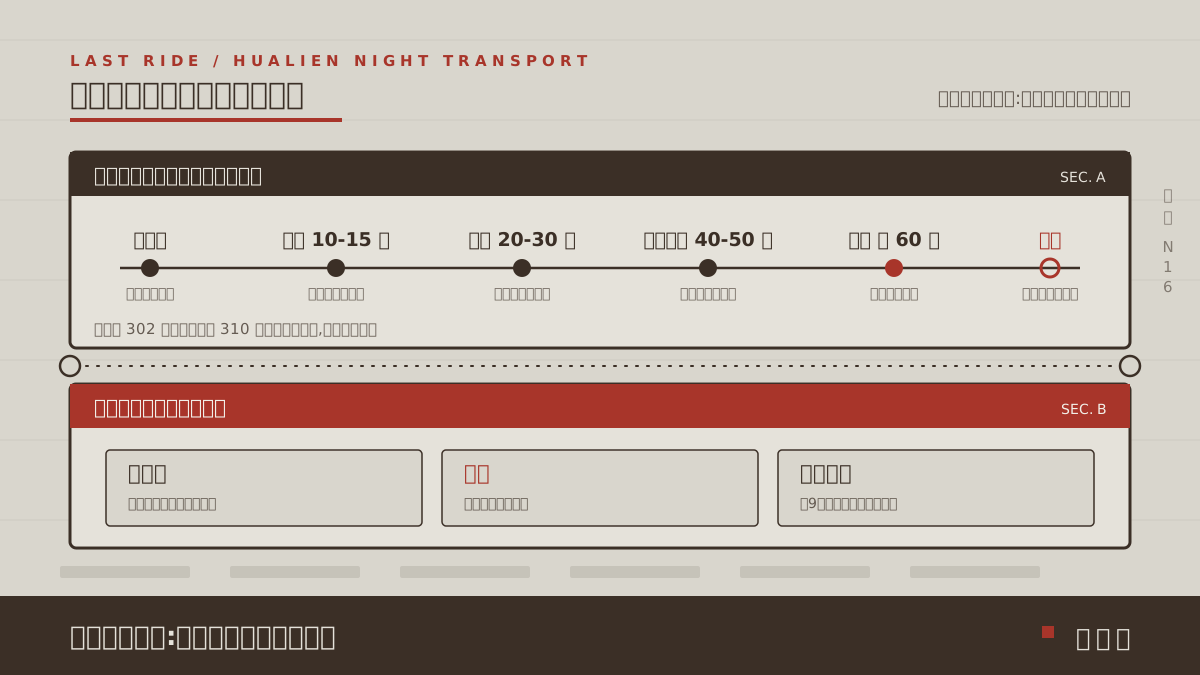
Two axes carry movement inside the county. The Northern Link line runs up to Xincheng (Taroko) Station; the Valley line runs south through Ji’an, Zhixue, Shoufeng, Fenglin and Guangfu to Yuli.
Worth memorising the drive times: Hualien City to Ji’an is ten to fifteen minutes, to Zhixue twenty to thirty, to Fenglin and Guangfu forty to fifty, to Yuli about an hour. Yuli is the southern valley’s major stop, and most express trains call there.
The catch is the last service. Evening local trains finish earlier than visitors assume and stopping patterns vary by station. Always check the last train against TRA’s timetable for that day. If you already know the night will run long, the train isn’t in the running.
Buses: a daytime tool
City buses, the 302 Qixingtan line and the 310 Taroko shuttle are all daylight routes that finish in the evening. Hualien Bus Terminal beside the station handles intercity coaches, which are not a way home either.
Ten minutes from the train station into the centre by bus or taxi — that’s the daytime version of the sentence. Late at night, only the second half still holds.
Taxis: fine downtown, slower once you leave
Hualien City is small, and rides around Dongdamen, the Old Railway district and Zhongshan Road are not hard to get late. Availability drops one ring out: Ji’an works but you’ll wait; Qixingtan and Xincheng need patience; in valley towns like Yuli and Fenglin supply is genuinely limited, so put the wait into the schedule.
A crude but effective habit: on a night that ends outside the city, take the number of the driver who brought you there and agree a pickup time.
Designated drivers: the only answer once you drink
Nothing to debate here. If you drove or rode in and alcohol is involved, the way back is a designated driver or a taxi.
The reason is road conditions, not morality. Highway 9 carries fast trucks at night with sparse lighting; the coast road is darker; Zhixue Street and the valley towns fall silent quickly after closing, so nobody is roadside when something goes wrong. After a round through the downtown bars, handing over the keys is the cheapest insurance available.
Rented scooters: the freest option, the most conditions
Scooters are the visitor’s default in Hualien and unbeatable by day. At night, three conditions attach: full headlights, bright or reflective clothing, and stay to the shoulder. County Road 193 and the Highway 11 coastal stretch get strong wind and thin lighting, and the Highway 9 valley run carries fast traffic. Neither suits a tired rider. The differences are laid out in valley versus coast at night.
Four situations, four standard answers
Staying in Hualien City: walk everywhere, taxi home. This is exactly why most people end up basing downtown.
Staying in Ji’an: taxi back after eleven, a ten-minute ride, with a wait attached.
Staying at Qixingtan or Xincheng: the night market and bar plan strands you. Buses have stopped, so it’s a taxi or your own wheels, about twenty minutes. Either do the coast by day and the city by night, or accept the fare.
Out in Yuli, Fenglin or Guangfu: finish early. These towns are near-silent after nine. Head north to Hualien City for a real night, check the last train first, or simply book a room and stay.
Answer the three questions before you go, and the way home stops being a problem.